Portland Urban Coyote Project
  • Home
  • Report/Evaluate
  • Map
  • Learn
    • Basics
    • Tutorial
      • Identifying Coyotes
      • Encountering Coyotes
      • About Coyotes
    • Printables
    • For Educators
    • Additional Resources
  • FAQ
  • Research
  • Blog
  • Photos & Videos
  • Support
    • Donate
    • Shop
    • Volunteer
  • Coyote-palooza!
    • 2025 Poster Contest
  • Home
  • Report/Evaluate
  • Map
  • Learn
    • Basics
    • Tutorial
      • Identifying Coyotes
      • Encountering Coyotes
      • About Coyotes
    • Printables
    • For Educators
    • Additional Resources
  • FAQ
  • Research
  • Blog
  • Photos & Videos
  • Support
    • Donate
    • Shop
    • Volunteer
  • Coyote-palooza!
    • 2025 Poster Contest
Search
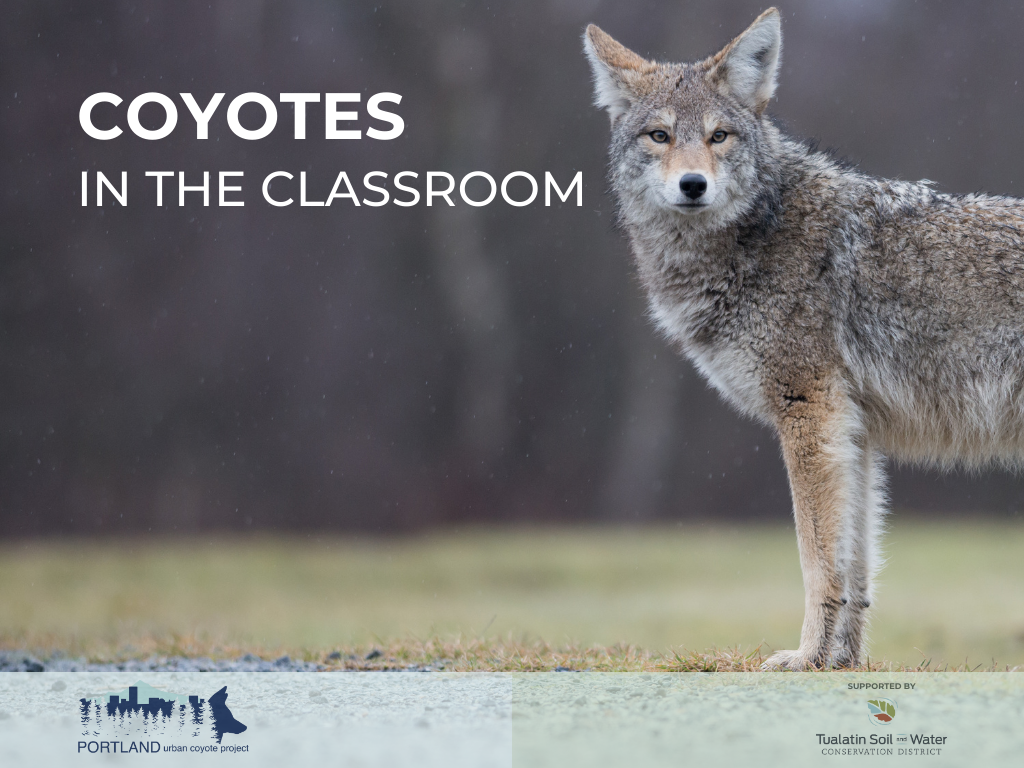
Coyotes in the Classroom (and Beyond!)
The materials in this free workbook are based on content in our tutorial and are intended for use inside and outside the classroom. We hope this workbook will be useful for teachers, homeschoolers, parents, after school programs, summer camps, and more! We'd love to know how you are using this workbook--please give us feedback!
PUCP Workbook by Zuriel van Belle
Download Workbook

Supplemental Materials
Picture
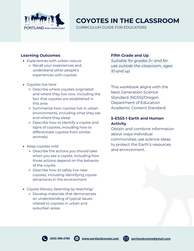
Curriculum Guide
Picture
Workbook Companion Slides
Picture
Answer Key
To access the answer key, please contact us and provide your school affiliation or other affiliation/intended use.

Do These Materials Work?

We visited a local elementary school to pilot our classroom materials. We distributed questionnaires before and after two in-class visits using the workbooks and companion slides to three fifth-grade classes (n=62) to measure any changes in knowledge and feelings toward coyotes.
​
  • The classroom visits increased student knowledge about coyotes substantially.
    • A paired samples two-tailed t-test showed a significant increase in average scores from pre (M = 4.10 out of 7) to post (M = 5.61 out of 7), p = 1.03 × 10⁻⁹. The null hypothesis was rejected. Cohen's d was 1.20, indicating a large effect.
  • The classroom visits improved attitudes toward coyotes slightly.
    • A paired samples two-tailed t-test showed a significant increase in average scores from pre (M = 3.49 out of 5) to post (M = 3.69 out of 7), p = 0.026. The null hypothesis was rejected. Cohen's d was 0.21, indicating a small effect
​
Teachers found our materials informative and engaging but indicated that what they highly valued was the in-classroom visit from a researcher. Our capacity to visit classrooms is extremely limited, so future work bridging the gap between students and researchers is warranted.

We want to feature your work!

Submit pages from your workbook, final projects, and other coyote-inspired work—we'd love to see what you've come up with!
Made possible by generous support from
Picture
Thank you!

Feedback?
Our project is run by a small team of researchers and community members who are passionate about understanding how humans and coyotes interact and providing evidence-based information about living with coyotes. We want to make sure our project stays sustainable and useful so we want to hear from YOU. Thank you!
  • Home
  • Report/Evaluate
  • Map
  • Learn
    • Basics
    • Tutorial
      • Identifying Coyotes
      • Encountering Coyotes
      • About Coyotes
    • Printables
    • For Educators
    • Additional Resources
  • FAQ
  • Research
  • Blog
  • Photos & Videos
  • Support
    • Donate
    • Shop
    • Volunteer
  • Coyote-palooza!
    • 2025 Poster Contest